Source Anti Oxidant Water Cooling Cold Plate for Lasers, IGBT, Medical
Find 30 anti oxidant water cooling cold plate options from Jiangsu, China, featuring vacuum brazing and CNC machining for lasers, IGBT modules, and medical equipment. Compare specifications including working pressure, surface finish, and cooling liquid types to select the right solution for your machinery needs.
Key considerations
Products List






Comprehensive Sourcing Guide
Strategic Sourcing Guide for Anti-Oxidant Water Cooling Cold Plates
Understanding the Technical Architecture of Custom Cold Plates
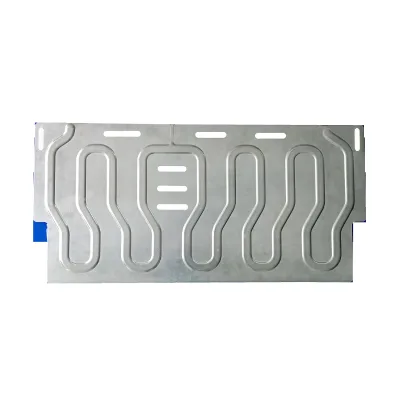
The procurement of anti-oxidant water cooling cold plates requires a deep understanding of the specific manufacturing techniques that define their thermal performance and structural integrity. In the current market, these components are not generic off-the-shelf items but highly engineered solutions tailored to specific thermal loads. The core technology often relies on a combination of Friction Stir Welding (FSW), Press Tube, and Vacuum Brazing processes. These methods are critical for creating the internal flow channels that facilitate efficient heat transfer while maintaining the structural rigidity required for high-pressure applications.
The raw materials selected are predominantly Copper and Aluminum, chosen for their superior thermal conductivity. Aluminum is frequently the material of choice for the fin structures, utilizing an Aluminum Fin Vacuum-Brazed technique to maximize surface area for heat dissipation. The tube integration varies significantly based on the design requirements, with options including Friction Stir Welded (FSW) into the sidewalls, Exposed-Tube Techniques, Full-Buried-Tube Techniques, Half-Buried Techniques, and Sandwiched-Tube Techniques. Each of these configurations offers a different balance between flow resistance, manufacturing complexity, and thermal efficiency. For instance, the Full-Buried-Tube Technique often provides a smoother external surface, which is beneficial for applications where aerodynamic drag or physical clearance is a concern, whereas the Exposed-Tube Technique might be preferred for ease of inspection or specific flow dynamics.
The working pressure range for these systems typically falls between 1.2 to 5 Bars, a specification that must be strictly adhered to during the design phase to ensure safety margins. The fluid medium is generally Water or Water/Glycol mixtures, though some designs accommodate Refrigerants depending on the specific cooling loop requirements. The surface finish is another critical technical parameter, with options ranging from Mill Finish to Anodization, Painting, or Custom treatments. The surface roughness is often specified around 1.2 Um, and flatness is maintained below 0.005 Cm to ensure optimal contact with the heat-generating component. These precise dimensional tolerances are essential for minimizing thermal resistance at the interface between the cold plate and the electronic or mechanical load.
Compliance and Certification Verification Protocols
When sourcing industrial-grade cooling components, verifying compliance with international standards is non-negotiable. Buyers must ensure that the supplier can provide documentation for recognized certifications such as CE, ISO, and RoHS. These certifications indicate that the product meets specific safety, environmental, and quality management requirements. Additionally, SGS certification is often observed in high-quality listings, serving as an independent verification of the product's material composition and manufacturing processes.
The certification landscape for these cold plates extends beyond the product itself to the manufacturing facility. The presence of ISO certification suggests that the supplier operates under a quality management system that ensures consistency in production. CE marking is particularly vital for products intended for the European market, confirming compliance with health, safety, and environmental protection standards. RoHS compliance is equally critical, as it restricts the use of specific hazardous materials in electrical and electronic equipment, ensuring the product is environmentally safe throughout its lifecycle.
Buyers should also be aware of the specific standards applied to the product design. While some products are manufactured to a "Customized" standard, others may adhere to OEM specifications. It is essential to verify that the "Customized" standard mentioned in product listings aligns with the buyer's internal engineering requirements. The product origin, often listed as Jiangsu, China, or generally China, should be cross-referenced with the supplier's ability to provide traceable documentation for these certifications. The absence of specific certification data in a product listing should be treated as a red flag, prompting a direct inquiry to the supplier for proof of compliance before proceeding with any order.
Cost Drivers and Economic Factors in Procurement
The pricing of anti-oxidant water cooling cold plates is influenced by a complex interplay of factors, including material costs, manufacturing complexity, and customization levels. The observed price range in the market is extensive, spanning from $0.10 to $45,000. This wide variance is not indicative of a single product type but rather reflects the diversity of applications, from small-scale electronic cooling to large industrial systems. The lower end of the price spectrum typically corresponds to standard, off-the-shelf models with minimal customization, while the upper end represents large, complex assemblies with unique geometries and high-performance materials.
Material selection is a primary cost driver. Aluminum is generally more cost-effective than copper, but the choice often depends on the specific thermal and mechanical requirements of the application. The manufacturing process also significantly impacts cost. Techniques like Friction Stir Welding and Vacuum Brazing require specialized equipment and skilled labor, which can increase the unit price compared to simpler machining processes. Furthermore, the surface finish and treatment options, such as anodization or painting, add to the overall cost.
The Minimum Order Quantity (MOQ) is another critical economic factor, with observed ranges from 1 to 2000 units. For buyers requiring small batches for prototyping or low-volume production, suppliers with an MOQ of 1 are essential. However, for large-scale production runs, negotiating a lower unit price by increasing the order volume is a standard practice. The lead time, while not explicitly defined in the provided facts, is often correlated with the complexity of the customization and the current production capacity of the supplier. Buyers should anticipate that highly customized orders with specific certifications may require longer lead times compared to standard models.
Typical Applications and Industry Use Cases
Anti-oxidant water cooling cold plates are versatile components used across a wide array of industries, primarily where precise thermal management is critical. The primary application fields include Machinery, Electronics, and Medical Lasers Equipment. In the electronics sector, these cold plates are essential for cooling high-power components such as IGBT modules, which are commonly found in power conversion systems. The ability to manage the heat generated by these modules is crucial for maintaining system reliability and preventing thermal failure.
Medical laser equipment represents another significant application area. These systems often generate intense heat that must be dissipated rapidly to prevent damage to sensitive optical components and to ensure the stability of the laser output. The use of Water Cooling Blocks specifically designed for lasers highlights the need for high-efficiency heat transfer and precise temperature control. Additionally, the application of these cold plates in general machinery cooling underscores their role in maintaining the operational efficiency of industrial equipment.
The principle of operation for many of these cold plates is based on the Regenerative Heat Exchanger concept, which allows for efficient heat recovery and transfer. This principle is particularly useful in applications where energy efficiency is a priority. The system type is often described as "Combined," suggesting that these cold plates can be integrated into larger cooling loops that may include pumps, reservoirs, and heat exchangers. The choice of liquid types, such as Water, Water/Glycol, or Refrigerant, further expands the range of applications, allowing these components to be used in environments ranging from standard industrial settings to specialized medical or laboratory conditions.
Supplier Evaluation and Quality Control Standards
Evaluating a supplier for anti-oxidant water cooling cold plates requires a rigorous assessment of their technical capabilities and quality control processes. The manufacturing techniques employed, such as CNC Machining, Stamping, and Vacuum Brazing, are key indicators of a supplier's capability. Buyers should verify that the supplier has the necessary equipment and expertise to execute these processes with the required precision. The surface flatness and roughness specifications, such as below 0.005 Cm and 1.2 Um respectively, are critical metrics that should be verified through quality control reports.
Quality control should also encompass the testing procedures used to validate the performance of the cold plates. The use of Analog Simulation is a notable method for testing thermal performance and structural integrity before physical prototypes are built. This approach allows suppliers to identify potential design flaws and optimize the product before production begins. Buyers should request test data and simulation results to ensure that the supplier's claims are backed by empirical evidence.
The after-sales service provided by the supplier is another important factor in the evaluation process. A commitment to providing after-sales support, including warranty coverage of 12 months, indicates a supplier's confidence in their product quality. The warranty terms should be clearly defined, covering defects in materials and workmanship. Additionally, the packaging method, described as "Standard Packaging" or "The Best Packaging Method," should be evaluated to ensure that the product is protected during transit. Proper packaging is essential to prevent damage to the delicate surfaces and internal channels of the cold plates.
Long-Term Procurement and Maintenance Considerations
Sourcing anti-oxidant water cooling cold plates is not just a one-time transaction but a long-term partnership that requires careful planning and consideration. The condition of the product, typically listed as "New," should be verified to ensure that the components are in pristine condition and ready for immediate installation. The customization options available, such as the ability to tailor the shape and dimensions up to 1.2*1m, allow buyers to adapt the product to their specific needs over time.
Maintenance and longevity are critical aspects of long-term procurement. The choice of materials and surface finishes plays a significant role in the durability of the cold plate. Anti-oxidant properties are essential for preventing corrosion, especially in environments where the cooling fluid may contain impurities or where the system is exposed to varying temperatures. The selection of the appropriate cooling water, whether it is pure water or a Water/Glycol mixture, can also impact the long-term performance and lifespan of the cold plate.
Buyers should also consider the scalability of their procurement strategy. As production volumes increase, the ability to maintain consistent quality and pricing becomes more important. Establishing a relationship with a supplier who can handle both small and large order volumes, as indicated by the MOQ range of 1 to 2000, can provide flexibility in managing inventory and production schedules. Furthermore, the availability of spare parts and the supplier's responsiveness to technical inquiries are key factors in ensuring the continued operation of the cooling systems.
Comparative Analysis of Product Specifications
To facilitate informed decision-making, it is helpful to compare the key specifications of different cold plate models. The following table outlines the variations in model numbers, materials, and manufacturing techniques observed in the market.
| Product Model | Primary Material | Manufacturing Technique | Surface Finish Options | Working Pressure Range | | :--- | :--- | :--- | :--- :--- | | WCP002 | Copper, Aluminum | FSW, Press Tube, Vacuum Brazing, CNC | Mill Finish, Anodization, Painting | 1.2 to 5 Bars | | NMW001 | Aluminum | Stamping, CNC Machining, Vacuum Brazing | Custom | 1.2 to 5 Bars | | EHS2101 | Aluminum | Stamping, CNC Machining, Vacuum Brazing | Custom | 1.2 to 5 Bars |
This comparison highlights the diversity in manufacturing techniques and material choices available to buyers. While all models share a common working pressure range, the specific manufacturing processes and surface finish options may vary based on the supplier's capabilities and the buyer's requirements. Understanding these differences is crucial for selecting the right cold plate for a specific application.
In conclusion, sourcing anti-oxidant water cooling cold plates requires a comprehensive understanding of the technical, economic, and regulatory factors involved. By carefully evaluating the manufacturing techniques, certifications, cost drivers, and supplier capabilities, buyers can make informed decisions that ensure the reliability and efficiency of their thermal management systems. The long-term success of these procurement efforts depends on establishing strong partnerships with suppliers who can deliver high-quality products and provide ongoing support.
FAQs
What manufacturing processes are used for these cold plates?
These cold plates utilize Friction Stir Welding, Press Tube, Vacuum Brazing, and CNC Machining. The combination of these techniques ensures structural integrity and efficient heat transfer for high-pressure applications.
Which certifications do these products typically hold?
Products commonly hold CE, ISO, RoHS, and SGS certifications. These credentials verify compliance with safety, environmental, and quality management standards required for international industrial and medical applications.
How much does a custom cold plate cost?
Prices range from 0.10 to 45,000 USD depending on complexity and customization. Simple standard models cost less, while large assemblies with unique geometries and high-performance materials command higher prices.
Can I order a single unit for prototyping?
Yes, suppliers accept Minimum Order Quantities as low as one unit. This flexibility supports prototyping and low-volume production needs before committing to larger manufacturing runs.
What materials are used for the cold plates?
The primary raw materials are Copper and Aluminum. Aluminum is often used for fin structures to maximize surface area, while copper provides superior thermal conductivity for specific high-load requirements.
What is the maximum size available for customization?
Custom dimensions can reach up to 1.2 meters by 1 meter. This allows for tailored solutions to fit specific machinery or electronic equipment layouts without compromising thermal performance.
Which industries use these water cooling blocks?
They are applied in Machinery, Electronics, and Medical Lasers Equipment sectors. Specific uses include cooling IGBT modules and maintaining stability in medical laser systems requiring precise temperature control.